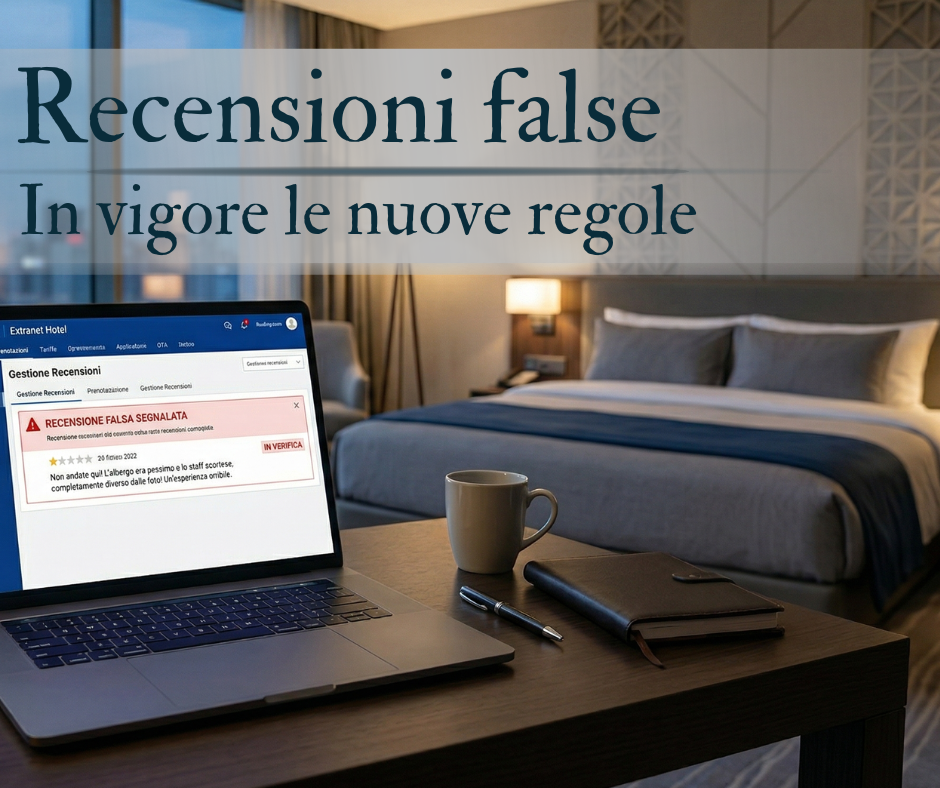
The hospitality sector is facing a regulatory breakthrough it has long awaited. April 7, 2026, marks the official entry into force of Law No. 34/2026 (known as the PMI Bill), a measure that promises to combat the phenomenon of fake reviews and protect the digital reputation of tourism businesses.
Despite the law's entry into force, the situation remains somewhat unclear: the Antitrust Authority (AGCM) and the Italian Communications Authority (AGCOM) are still awaiting the publication of operational guidelines , which are essential for defining sanctions and codes of conduct for platforms.
The pillars of the new law: when is a review "legitimate"?
Topics index
The law introduces more stringent criteria for distinguishing genuine feedback from unfair commercial practices. To be considered legitimate, a review must now meet specific requirements:
Direct experience: The comment must come from someone who has “actually and personally” used the service.
Timing: Publication must occur within 30 days of the experience.
Relevance: The description must be consistent with the service received, avoiding gratuitous or instrumental attacks.
Lack of incentives: Reviews resulting from exchanges (discounts, gifts, or benefits) promised by the supplier to "adjust" the rating are banned.
Defense tools for hoteliers
One of the most significant innovations concerns the reporting power.
Legal representatives of accommodation facilities can report reviews deemed to be illegal directly to Hosting Providers (such as TripAdvisor, Booking or Google), requesting their removal in accordance with the Digital Services Act.
Furthermore, trade associations will be able to request the qualification of "trusted reporter" , guaranteeing a preferential and more authoritative lane in disputes with the platforms.
The "Grey Zones" and the crux of the evidence
There are many critical issues that the guidelines will have to resolve. The main problem remains user identification.
If a guest books on one portal but reviews on another (perhaps under a nickname), how can you prove the authenticity of the experience?
The law specifies the receipt or tax document as the primary evidence, but it remains unclear how this can be provided without violating privacy or overly complicating the reporting process.
A 30 billion euro market
The urgency of this law lies in the numbers: according to Fipe , online reviews influence consumption worth approximately 30 billion euros in Italy alone.
However, the dark side is represented by a veritable black market: from review "fabricators" (already subject to criminal convictions in the past) to the use of artificial intelligence to serially generate feedback. In 2024 alone, platforms like Trustpilot had to remove approximately 4,5 million fake reviews.
For hoteliers, Law 34/2026 is a first step toward a more transparent digital ecosystem, but the real challenge will be the authorities' ability to enforce these rules on the web giants.
To learn more about the technical details of the law, you can consult the official text on the Official Journal website.
If you want to stay up to date on the latest legislative news for the non-hotel and hospitality sector, subscribe to the newsletter of Direzione Hotel by filling out the form at the bottom of the page!